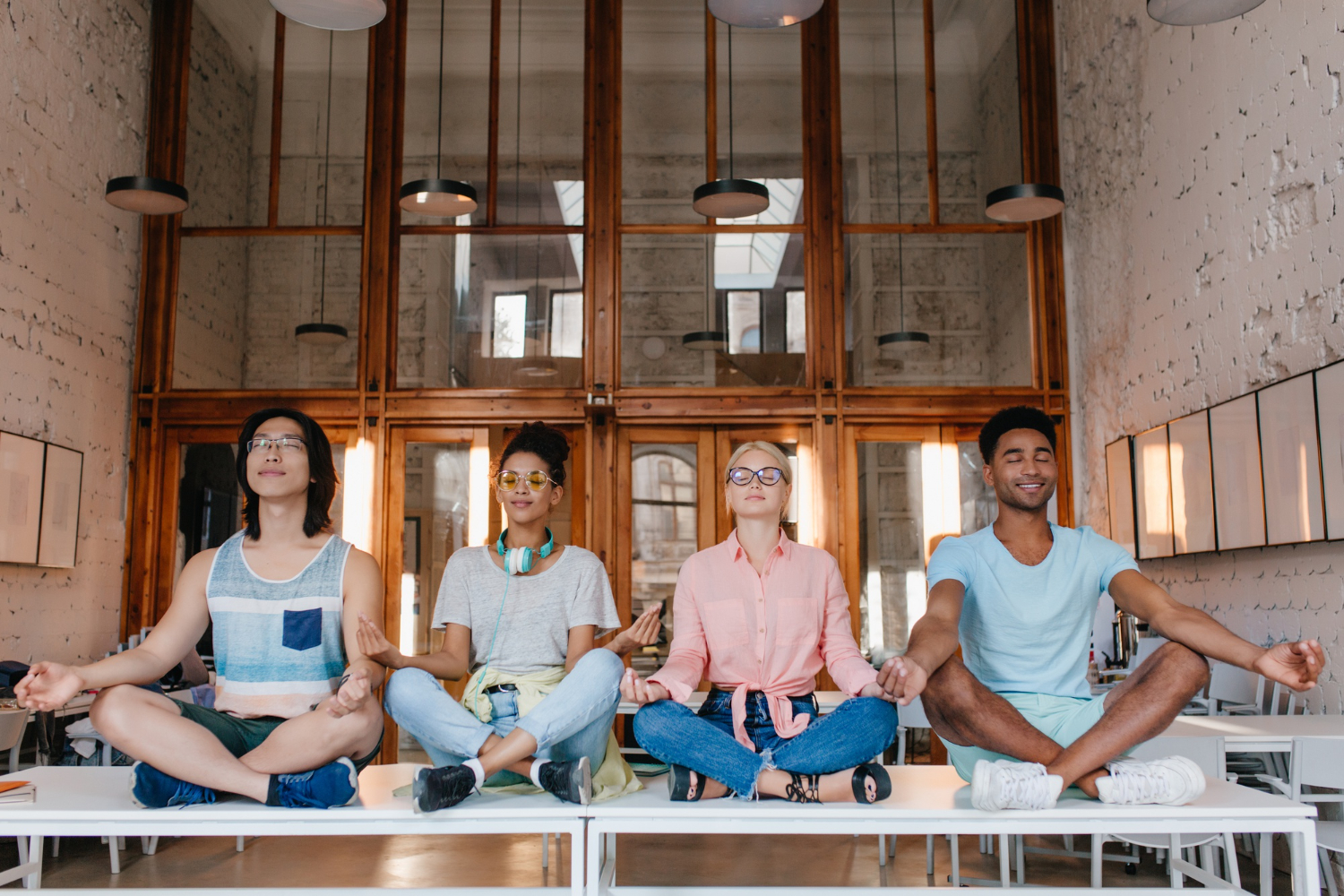
Introduction
In today’s fast-paced world, stress and anxiety have become common experiences. To counteract these pressures, many people turn to mindfulness and meditation as ways to find inner peace and improve mental well-being. But what’s the difference between the two? Are they interchangeable, or do they serve distinct purposes?
This blog explores mindfulness vs. meditation, their benefits, and how to determine which practice is right for you.
What Is Mindfulness?
Mindfulness is the practice of being fully present in the moment, without judgment. It involves consciously focusing on your surroundings, thoughts, emotions, and sensations in a non-reactive way.
Key Aspects of Mindfulness:
- ✅ Being aware of your thoughts and feelings without over-identifying with them
- ✅ Practicing acceptance of the present moment
- ✅ Applying mindfulness to daily activities like eating, walking, or working
Benefits of Mindfulness:
- 🔹 Reduces stress and anxiety – By focusing on the present, mindfulness helps prevent overthinking and worrying about the future.
- 🔹 Enhances focus and productivity – Being mindful can improve attention and concentration.
- 🔹 Improves emotional regulation – It allows you to respond calmly rather than react impulsively.
Examples of Mindfulness Practices:
- Mindful Breathing – Taking deep breaths while paying full attention to the sensation of inhaling and exhaling.
- Mindful Eating – Eating slowly and savoring every bite, noticing flavors and textures.
- Body Scan Awareness – Checking in with different parts of the body to observe sensations and tension.
- Mindful Walking – Paying attention to each step, feeling the ground beneath your feet.
Mindfulness can be practiced anytime, anywhere, making it an excellent choice for those who want a simple yet powerful way to stay grounded.
What Is Meditation?
Meditation is a structured practice that involves dedicated time to train the mind and cultivate awareness, focus, or relaxation. While mindfulness can be applied in daily life, meditation often requires setting aside specific time for practice.
Key Aspects of Meditation:
- ✅ Requires setting aside time for practice (e.g., 5–30 minutes daily)
- ✅ Often involves a specific technique or focus (e.g., breath, mantra, visualization)
- ✅ Can lead to deep relaxation and altered states of awareness
Benefits of Meditation:
- 🔹 Enhances emotional well-being – Meditation helps manage stress, anxiety, and negative emotions.
- 🔹 Boosts self-awareness – It allows you to observe thoughts and detach from negative mental patterns.
- 🔹 Improves sleep quality – Meditation can help with insomnia by promoting relaxation.
- 🔹 Strengthens cognitive function – Studies show it can improve memory, creativity, and problem-solving.
Types of Meditation Practices:
- Focused Attention Meditation – Concentrating on a single object (e.g., breath, candle flame, sound).
- Loving-Kindness Meditation (Metta) – Cultivating feelings of love and compassion for oneself and others.
- Transcendental Meditation – Using a mantra or repeated phrase to reach deep relaxation.
- Guided Meditation – Listening to an instructor or recording to lead the meditation.
Unlike mindfulness, which can be incorporated into daily tasks, meditation requires a dedicated period of stillness and focus.
Mindfulness vs. Meditation: Key Differences
| Aspect | Mindfulness | Meditation |
|---|---|---|
| Definition | Being fully present in daily life | Structured practice to train the mind |
| How It’s Practiced | Anytime, during daily activities | Requires setting aside time |
| Goal | Awareness of the present moment | Deep relaxation or mental clarity |
| Time Commitment | Can be done all day | Usually 5-30 minutes daily |
| Best For | Reducing stress, improving focus | Deep relaxation, spiritual growth |
Which One Is Right for You?
💡 Choose Mindfulness If:
- ✔️ You want an easy, informal way to reduce stress.
- ✔️ You prefer something you can integrate into daily life (e.g., mindful eating, walking).
- ✔️ You want to improve focus and presence in everyday tasks.
💡 Choose Meditation If:
- ✔️ You are looking for a structured practice with deep relaxation benefits.
- ✔️ You are interested in training the mind for greater clarity and self-awareness.
- ✔️ You have time to dedicate to a daily or weekly meditation routine.
💡 Try Both If:
- ✔️ You want a well-rounded approach to mental well-being.
- ✔️ You want the benefits of mindfulness in daily life and the depth of meditation practice.
Final Thoughts
Mindfulness and meditation are powerful tools for mental clarity, stress reduction, and emotional well-being. While mindfulness can be practiced throughout the day, meditation allows for deeper mental training and relaxation. The best approach depends on your lifestyle, goals, and personal preferences.